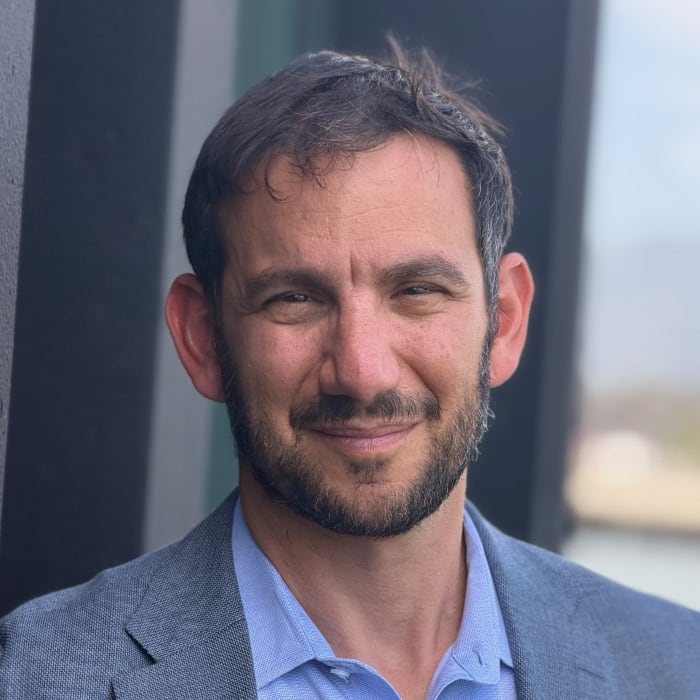
Frank Brodie
Assistant Professor of Ophthalmology, University of California, San Francisco, USA
False
Assistant Professor of Ophthalmology, University of California, San Francisco, USA
What is the most exciting thing happening in the retina space right now?
This is an exciting time to be practicing retina, with a robust pipeline of promising innovation. The last 20 years have validated vascular endothelial growth factor (VEGF) as a key mediator in many of the diseases we treat, and we now have progressively longer-acting anti-VEGF therapies. We are seeing two parallel developments: steady-dosing agents, and the exploration of novel mechanisms beyond VEGF.
Starting with the port delivery system and continuing with bio-factory gene therapies, we can offer patients steady-state VEGF inhibition, which should reduce treatment burden and provide disease-modifying effects beyond the peak-trough kinetics of intravitreal injections. Faricimab has already shown, through its inhibition of Ang-2, the value of thinking beyond VEGF, and late-stage data from tyrosine kinase inhibition, along with early WNT pathway data, prove that multiple high-impact routes exist beyond VEGF inhibition. Alongside these new pathways, the growing power of AI models, combined with higher-resolution imaging and molecular diagnostics, will soon let us subtype “wet AMD” and target therapy far more precisely than we can today.
Another exciting area of innovation is the explosion of vision restoration therapies. Across three categories -- retinal prosthesis, cell therapy and optogenetics -- we are seeing significant investment and remarkable results. The Argus implant demonstrated the promise of retinal prosthesis over a decade ago. I’m fortunate to be part of the PRIMA program at Science Corporation, where we have shown, for the first time, restoration of formed vision (the ability to read) with a subretinal photovoltaic implant in patients with very advanced geographic atrophy. Other groups are transplanting RPE cells into areas of macular atrophy, and late-stage trials in gene therapy and optogenetics have shown promising results.
Taken together, we are entering the era of restoring vision for blind patients for the first time. While studies have been conducted in specific patient populations, many of these therapies will be disease-agnostic and driven primarily by anatomy, offering hope to a broad range of patients with late-stage vision loss.
Who have been your most important mentors?
Mentors have played a formative role in my career and more broadly in my life. I’ve been fortunate to have outstanding mentors, each offering guidance on different aspects of my journey into retina – from compassion as a clinician, to translational research, to addressing engineering challenges.
In medical school at UPenn, Dr. Alexander “Sandy” Brucker took me under his wing, teaching me in the clinic and guiding me through a series of research projects. I remember the care he showed patients navigating macular disease, caring for entire families with the compassion of a master clinician.
During my residency at UCSF, Dr. Eugene De Juan opened my eyes to translational research and how to develop innovative projects that could directly impact care. A highly creative surgical innovator with over 100 patents and numerous high-impact technologies from his incubator, ForSight Labs, his approach to conceptualizing clinical challenges and translating them into novel products is one I try to emulate.
In my fellowship at Duke, Dr. Cindy Toth was a surgeon and clinician I tried to learn from at every opportunity. She showed me the critical relationship between a busy clinical practice and being a successful researcher and innovator, and taught me how to dive into research and engineering challenges, dissecting problems and building teams to solve them creatively.
Beyond these mentors, the person who has had the greatest influence on me, professionally and personally, is Dan Schwartz, a colleague in the retina division at UCSF and, importantly, my uncle. I grew up watching Dan develop the light adjustable lens with Bob Grubbs (Nobel laureate at Caltech), inspired by how they worked from theory to clinical trials and ultimately FDA approval – a technology now used in clinics worldwide. Dan’s dedication to patient care, creativity, passion for translational work, and determination to push projects to fruition have shaped my career, personality, and life choices.
I am deeply grateful to all my mentors for their investment in me and belief in me. I hope to pay that forward for the next generation.
What career goals do you want to achieve in the next five years?
I hope to secure FDA approval for two exciting technologies I’m working on: the PRIMA subretinal implant and the LensOne prosthetic capsular bag.
PRIMA's momentum gives me confidence in that same five-year timeline. Our multicenter clinical trial, published in the New England Journal of Medicine, followed 38 patients in five countries and found meaningful vision improvement in over eighty percent of patients at one year. Based on these data, PRIMA received market approval in Europe (CE mark), and in the US has also received Breakthrough Device designation along with two Humanitarian Use Device designations – one for the advanced, bilateral form of geographic atrophy that causes blindness, and one for Stargardt disease.
LensOne addresses a problem surgeons have long lacked a solution for: how to reliably fixate a secondary intraocular lens in eyes without capsule support. Our first-in-human results, recently published in Ophthalmology, are promising, and the FDA has granted LensOne Breakthrough Device Designation and cleared us to begin the GOLDEN GATE pivotal trial, a multicenter study that will build the evidence base this device needs to become a standard of care.
I believe both technologies have the potential to fundamentally transform patient care and to give ophthalmologists better solutions for treating patients. I have worked closely with the ophthalmology team at the FDA and look forward to our continued collaboration in bringing these products to the patients who need them.
Receive the latest Ophthalmology news, personalities, education, and career development – weekly to your inbox.
False