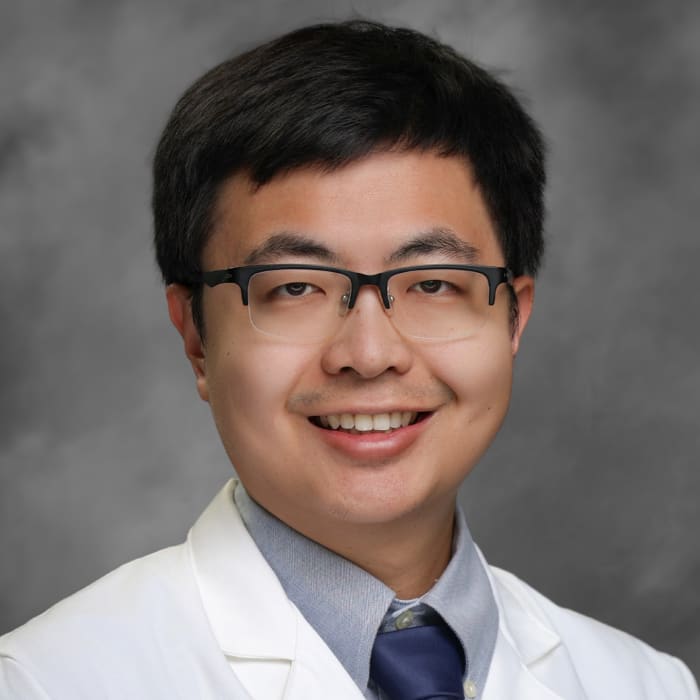
Liangbo “Linus” Shen
Vitreoretinal Surgery Fellow, Duke University School of Medicine; Incoming Assistant Professor of Ophthalmology, Retina Division, University of California, San Francisco, USA
False
Vitreoretinal Surgery Fellow, Duke University School of Medicine; Incoming Assistant Professor of Ophthalmology, Retina Division, University of California, San Francisco, USA
Liangbo “Linus” Shen’s career sits at the intersection of vitreoretinal surgery, engineering, retinal imaging, and artificial intelligence. As a surgeon, scientist, and inventor, he is interested not only in developing new technologies, but in ensuring that they address real clinical problems and ultimately improve the care of patients with retinal disease.
Dr. Shen is currently completing a vitreoretinal surgery fellowship at Duke University School of Medicine and will soon join the University of California, San Francisco, as an Assistant Professor of Ophthalmology in the Retina Division. At UCSF, he will establish the Precision Retinal Imaging and Machine Learning in Eye Health (PRIME) laboratory, where his research will integrate engineering, multimodal imaging, computational methods, and AI to advance precision retinal care.
His work includes the development of surgical devices, digital tools, and computational methods designed to model retinal disease progression, improve patient stratification, and strengthen the design of clinical trials in age-related macular degeneration and inherited retinal diseases. The aim is not simply to generate more data, but to extract information that can help clinicians understand which patients are at greatest risk, how their disease is likely to progress, and which treatments may be most effective.
For Dr. Shen, the most exciting development in retina is the convergence of advanced imaging, artificial intelligence, and an increasingly diverse therapeutic pipeline.
“Retina is moving beyond conventional anti-VEGF therapy toward longer-acting antibodies and bispecifics, complement and neuroprotective therapies for geographic atrophy, oral and small-molecule approaches, RNA-based therapies, and gene and cell-based therapies,” he says.
This expanding range of treatment options brings both opportunity and complexity. As more therapies become available, clinicians and researchers will need better ways to identify the patients most likely to benefit, select appropriate endpoints, and detect meaningful changes in disease over time.
“The next major opportunity is to use imaging and AI not only to diagnose disease, but also to identify the right patients, predict treatment response, accelerate drug development, and personalize therapy,” he explains.
His interest in clinically grounded innovation has been shaped by a succession of mentors across engineering, ophthalmology, and retinal research. His earliest and most formative mentor, he says, was the late Joseph Izatt at Duke. Prof. Izatt, together with Prof. Cynthia Toth, introduced him to translational imaging and the development of intraoperative optical coherence tomography. Their work demonstrated that engineering could be applied directly to surgery, giving clinicians information that could influence decisions in real time and potentially improve patient outcomes.
At Yale, Lucian Del Priore supported Dr. Shen as he began conducting retinal imaging research and helped develop his interest in disease modeling and clinical trial endpoints. During residency at UCSF, Jacque Duncan guided his work in inherited retinal disease, while Jay Stewart mentored his research in age-related macular degeneration. At Duke, Lejla Vajzovic has supported his development in vitreoretinal surgery and geographic atrophy imaging research, while Ramiro Maldonado has been an important collaborator and mentor in inherited retinal disease.
“Each has shaped how I think about retina as a clinician, surgeon, scientist, and mentor,” he says.
Going forward, Dr. Shen hopes to develop AI and computational imaging approaches that are firmly rooted in clinical needs. By combining multimodal retinal imaging with longitudinal disease-progression data and advanced statistical modeling, he aims to improve diagnosis, monitoring, prediction of treatment response, and therapeutic development.
A particular focus will be the creation of large, multi-institutional retinal imaging datasets supported by high-quality expert annotations. Such datasets could help researchers build more reliable models while ensuring that tools are applicable across different patient populations, clinical settings, and imaging platforms.
Dr. Shen also hopes to translate these approaches into practical biomarkers and clinical trial endpoints. More sensitive measures of disease progression could allow studies to identify treatment effects sooner, recruit more appropriate participants, and reduce the size or duration of trials.
Ultimately, his ambition is to make retinal clinical research faster, more efficient, and more patient-centered. By bringing together surgery, imaging, engineering, and computational science,he hopes to develop tools that not only advance research but also help clinicians make better decisions for individual patients.
From the nominator: “Dr. Shen is a true rising star in retina, combining surgical excellence, clinical insight, and methodological originality with an exceptional ability to translate engineering and computational ideas into tools that improve patient care. His record already reflects the independence of a faculty-level clinician-scientist, and he is poised to become a leader in image-guided surgery, computational ophthalmology, and retinal clinical trial design.”
Receive the latest Ophthalmology news, personalities, education, and career development – weekly to your inbox.

False