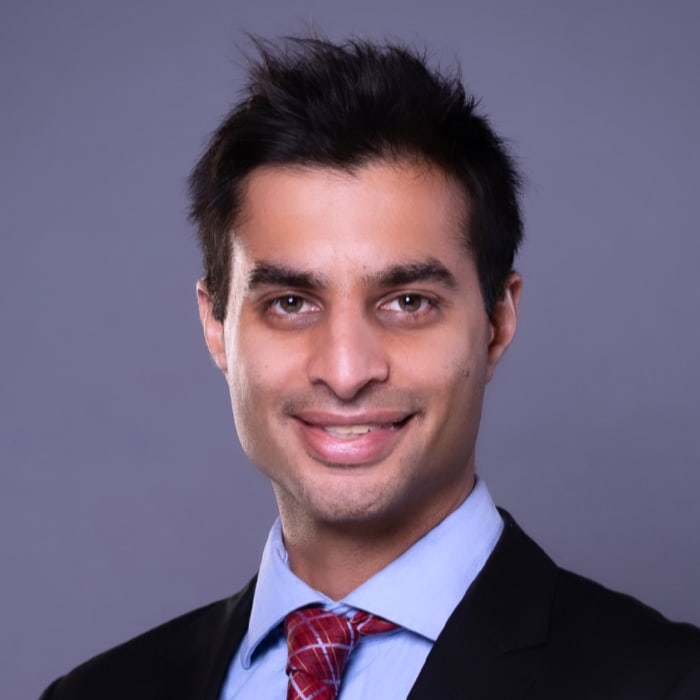
Nimesh A. Patel
Director of Pediatric Retina, Mass Eye and Ear and Massachusetts General Hospital; Director of Pediatric Retina Surgery, Boston Children’s Hospital; Assistant Professor of Ophthalmology, Harvard Medical School, USA
False
Director of Pediatric Retina, Mass Eye and Ear and Massachusetts General Hospital; Director of Pediatric Retina Surgery, Boston Children’s Hospital; Assistant Professor of Ophthalmology, Harvard Medical School, USA
For Nimesh A. Patel, progress in pediatric retina begins with a fundamental question: “Can care be made safer, more effective, and more individualized for every infant?”
His clinical and research work centers on developing and validating risk-stratified approaches to ROP screening and treatment. The prevailing model in many settings relies on relatively uniform screening protocols, but he believes that a more personalized approach could improve both safety and efficiency.
His work is founded on the hypothesis that infants should be screened and treated according to their individual risk profiles, rather than through a one-size-fits-all system. By identifying which infants require the closest surveillance, and which may safely begin screening later or undergo fewer examinations, clinicians could use limited resources more effectively while maintaining, or potentially improving, clinical outcomes.
This emphasis on personalization reflects a wider shift taking place throughout retina – one increasingly supported by artificial intelligence (AI).
“It might be cliché, but the most exciting, and scary, thing happening everywhere is probably artificial intelligence,” Dr. Patel says. Although he describes himself as having been “late to the game,” he has quickly become impressed by the technology’s rapidly expanding capabilities.
Much of the attention surrounding AI has focused on future clinical applications, but Dr. Patel is currently most enthusiastic about the ways it can strengthen research and improve efficiency. Even early-generation tools, he says, can analyze large datasets accurately within minutes and turn complex findings into clear graphical representations.
AI has also begun to influence his daily organization. Dr. Patel uses AI agents to review his calendar, schedule meetings, and identify available operating room time. In one recent example, an AI tool independently edited a 45-minute surgical video into a concise four-minute version while preserving the key operative steps.
“I have realized this is really only the beginning,” he says. “It won’t be long before we look back and say, ‘I can’t believe we used to have to do that time-consuming task ourselves.’”
Dr. Patel’s priorities remain grounded in patient care, however. “ I want to continue to try to be the best doctor I can be and take good care of as many patients as I can,” he says.
Beyond that, his clinical and research ambitions are closely aligned. While ROP is largely preventable, retinal detachments continue to occur both nationally and internationally – Dr. Patel hopes to reduce those cases by improving screening, education, treatment strategies, and access to specialist resources.
A major part of that effort involves working with nonprofit organizations, including Orbis, Zero Blind Babies, O2 Science, and ROPGO, particularly in Africa. In many underserved areas, clinicians face limited resources, variable access to screening, and insufficient data about how the disease presents in different populations.
“There is a need to gather data to understand the different phenotypes and characteristics of the disease in underserved areas,”Dr. Patel explains.
He is also interested in research supporting earlier treatment with anti-VEGF therapy. Current guidelines generally define specific thresholds for intervention, but Dr. Patel believes that treating selected infants at an earlier stage may help prevent unfavorable outcomes. Generating the evidence needed to identify which infants could benefit will be an important part of his future work.
At the same time, Dr. Patel and his collaborators are seeking to further validate algorithms that individualize screening schedules. For lower-risk infants, beginning screening later could reduce unnecessary examinations, ease pressure on healthcare systems, and allow specialist attention to be directed toward those at highest risk.
He hopes these projects will ultimately contribute to a global collaborative clinical and research network, supported by what he describes as his “superstar research fellows.” Education is already a significant part of his career: he serves as Associate Fellowship Director for the Mass Eye and Ear Vitreoretinal Surgery Fellowship and Co-director of the Pediatric Retina and Ocular Oncology Fellowship at Boston Children’s Hospital.
Away from the clinic and operating room, Dr. Patel enjoys traveling with his family and often brings them to professional conferences. Work, he admits, is never far away and remains “one of my main hobbies.” More recently, however, he has taken up road cycling as a low-impact way to exercise, spend time outdoors, and create some distance from an otherwise demanding professional life.
Receive the latest Ophthalmology news, personalities, education, and career development – weekly to your inbox.

False