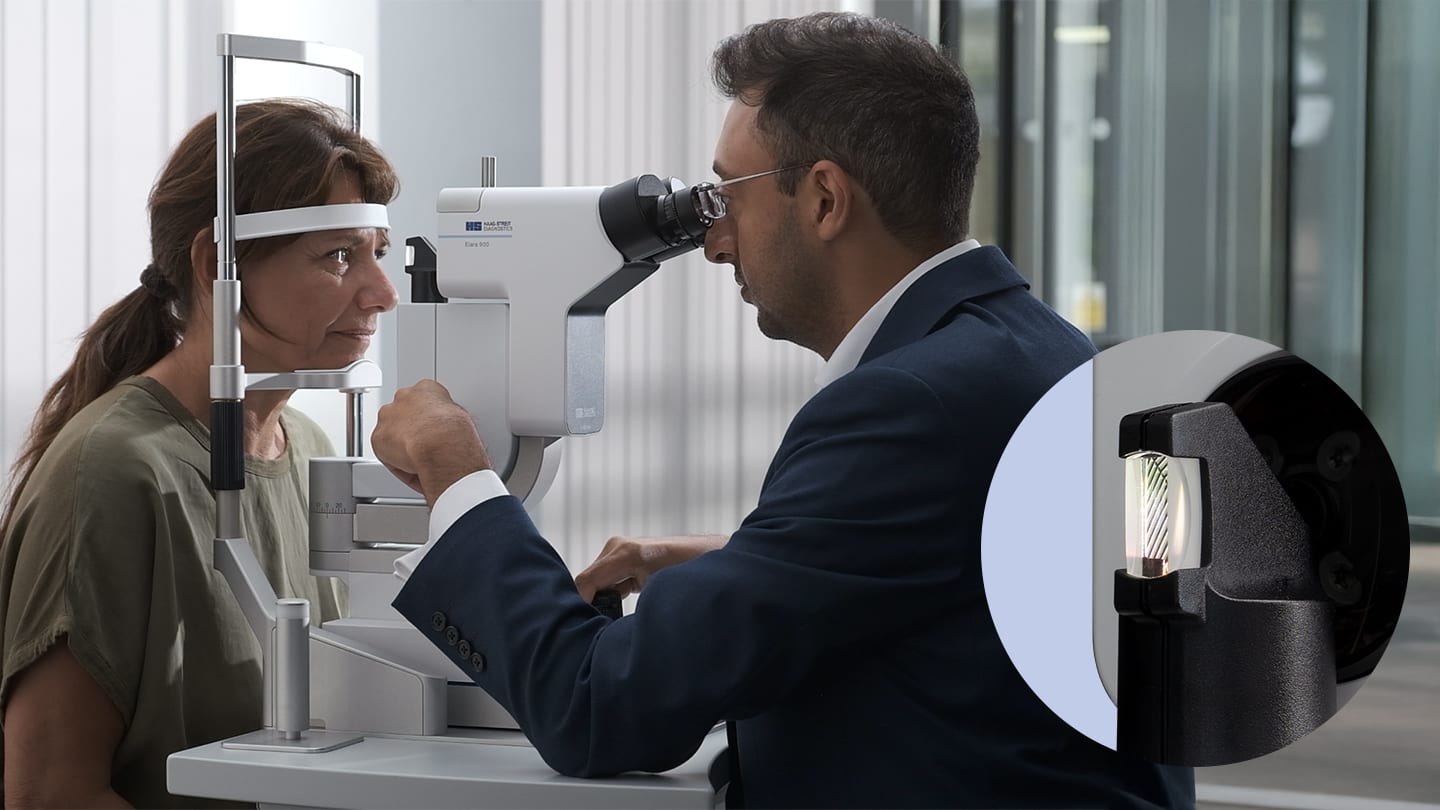
For decades, ophthalmologists relied on built-in halogen or tungsten bulbs to illuminate their slit lamp examinations, before LEDs became the preferred modern successor to the bulbs. Looking to take the next evolutionary step, the “P-Type” illumination technology, an inherent component to Haag-Streit’s new Elara 900 slit lamp, promises – like LEDs did back in the 2000s – to revolutionize how contemporary slit lamp examinations are performed.
Precision optics legacy
In the rapidly evolving landscape of precision optics, no manufacturer can risk losing momentum, and Elara 900 offers further proof that Haag-Streit is certainly not resting on its laurels.
Integrating new illumination technology into the company’s existing gold-standard optics – optics which, known throughout the world for their optimal precision and performance, have been proudly manufactured by Haag-Streit for many decades – the “P-Type” illumination optimizes the visualization experience for the physician, even surpassing the illumination technology of the BQ 900.
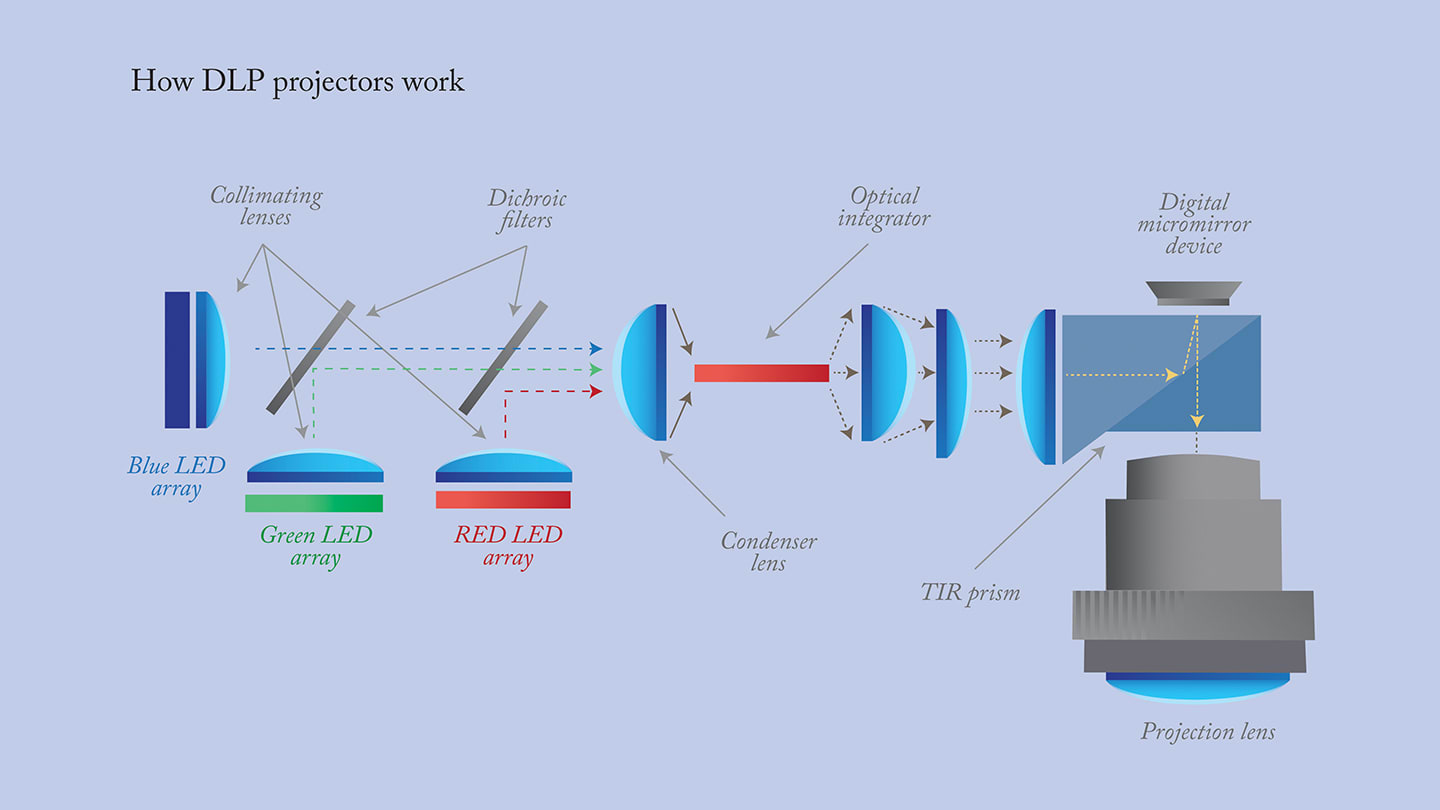
In a bid to enhance the white “blue-heavy” LEDs used in the majority of contemporary slit lamps, the “P-Type” projector utilizes different white tones to replicate the “color temperatures” that users are familiar with. Using red, green, and blue (RGB) LEDs, as well as infrared, alongside the DLP, it is possible to create individual pixels covering the entire RGB visible spectrum.
“P-Type” illumination
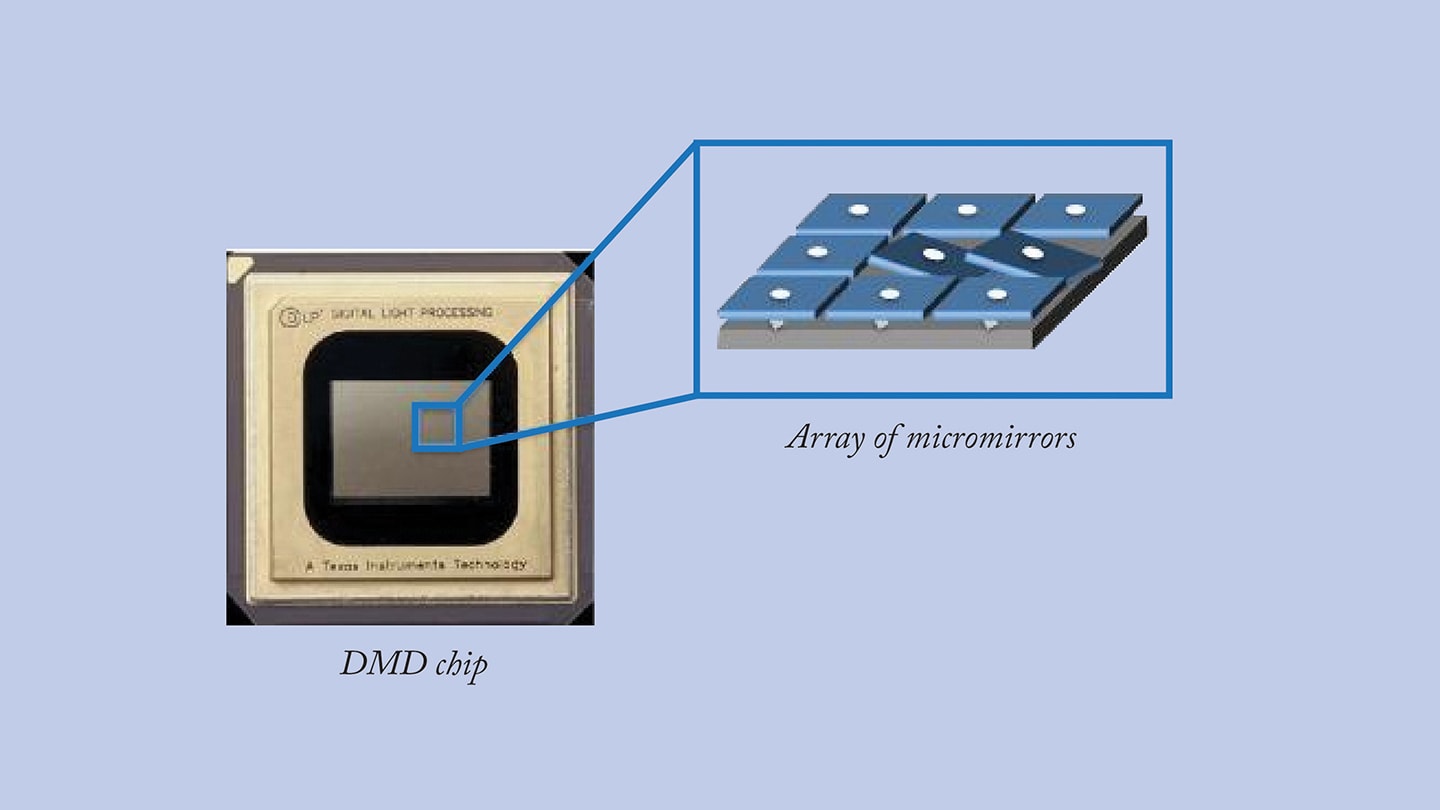
Initially developed in 1987 to replace analog projectors of film and video, DLP uses the three LEDs mentioned above – red, green, and blue – and a Digital Micromirror Device (DMD) – a semiconductor chip covered with millions of microscopic, individually addressable mirrors – to precisely control intensity, pattern, and color of projected light, creating an image of unparalleled depth and quality.
Now, Haag-Streit has converted this familiar DLP technology into a unique and innovative light source for Elara 900, providing superior image quality and fundus visualization when compared to traditional slit lamps. Built on the same principles DLP systems use for digital light modulation, Elara 900 uses a projector-style, digitally controlled RGB LED illumination engine.
This engine borrows the precision, spectral control, and uniformity principles of DLP projection to provide sharper, more customizable, and more reproducible slit illumination than either traditional halogen or single-white-LED systems.
Offering more illumination modes than traditional sources, the revolutionary “P-Type” can emit colors across the entire visible spectrum, allowing different color temperatures to be selected for individual pathologies, and giving ophthalmologists a high-resolution, high-contrast examination that aids in the identification of ocular structures.

“With the Elara 900 slit lamp… light is shown directly onto the eye, and that removes a source of aberration from that visualization,” notes Dr. Sunil Mamtora (pictured right) of Bristol Eye Hospital, University of Bristol, UK. “DLP illumination provides projection of individual pixels onto the eye and very clear and focused projections of the color spectrum… and that means for all the structures within the eye, we have an optimized examination, providing greater clarity, detail, and contrast.”
Superior clinical view
Building on the advantages this new technology offers, the “P-Type” serves as a natural successor to Haag-Streit’s gold-standard slit lamp, the BQ 900.
“Initially, I was skeptical about how the visualization and image quality on the Elara slit lamp would be different from the BQ 900 slit lamp,” says Dr. Mamtora. “[But] as soon as I examined the patient for the first time, the view just popped. I was very pleasantly surprised that there was a definite improvement in that visualization.”

Dr. Ike Ahmed (pictured right) of the Prism Eye Institute, Canada, agrees: “Getting behind the oculars, immediately I see the clarity. Haag-Streit optics have been great all along, but what I think is different here is the way the projection of light is given, rather than the classical LED light. Compared to my other slit lamps, I feel the clarity and the crispness are next level. It gives a real interpretation of color and clarity, [giving] an enhanced appearance of the eye."
The right light at your fingertips
Running alongside this enhanced visualization, Elara 900 introduces a novel concept of digital “presets”, allowing ophthalmologists the ability to change the shape, color, and intensity of the image in a split second. These “presets” reduce the time spent adjusting filters, modifying slit width or illumination intensity, and adjusting magnification. These automated examination scenarios reduce manual steps and transitions, allowing the ophthalmologist to fully focus on their examination with a single scroll of the “preset” wheel.
“I can set ‘presets’ for when I’m examining the external adnexa to the cornea, to the anterior chamber, to the lens, to the retina,” explains Dr. Ahmed. “[With a] simple button press… I get the optimized intensity of light, the width of light, the direction of light, and it’s all automated. I love the automation and ‘presets’ when I’m working the height and width of the slit beam, and the different magnification without [even] moving my hand.”
“Rather than having to twiddle so many buttons and dials on the slit lamp, you just turn one dial a fraction of a cm,” Dr. Mamtora adds. “That means you’re quicker, more efficient, and more comfortable.”
Sustainability & the light you can’t see
“P-Type” illumination also emits lights in the infrared light spectrum*, further boosting an ophthalmologist’s workflow by allowing assessment of the Meibomian glands, enabling the examination and high-contrast imaging of eyelid structures without shining any visible light into the patient’s eye.

“This is a great way to look at Meibomian glands,” notes Dr. Yuri McKee (pictured right) of East Valley Ophthalmology, Arizona, USA. “Previously, you had to buy an expensive device just to image Meibomian glands. Now your slit lamp will do it and take pictures of it at the same time.”
Notably, because the “P-Type” illumination is delivered via three individual long-life LEDs, which generate minimal heat and use far less energy, this new technology also reduces overall waste and environmental load across the device’s lifetime.
“The advantage of having a projector system for the light is that it’s going to be long lasting,” adds Dr. McKee. “So, you’re not going to be changing bulbs. Plus the entire device is much smaller without the light tower on it, [and there] is a wide variety of light combinations that you can use that were not available in previous slit lamp models.”
Seeing is believing
Judging by the feedback from the illustrious ophthalmologists who have already experienced Elara 900 and its integrated “P-Type” illumination first-hand, Haag- Streit is indeed continuing to innovate and revolutionize the precision optics space. The benefits of such illumination are wide-ranging: its excellent contrast and color accuracy, the wide range of colors it can project, and its unique light source and “preset” features – all signal genuine innovations in the slit lamp arena.
And if seeing truly is believing, then perhaps it is up to the discerning ophthalmologists out there to see for themselves whether they are as impressed by this innovative technology as Drs. Ike Ahmed, Sunil Mamtora, and Yuri McKee are. Because, as Immanuel Kant famously illumined during the Age of Enlightenment, “There can be no doubt that all our knowledge begins with experience.”
* Optional infrared illumination: availability may vary by region – please contact your Haag-Streit Distributor for details.