Conexiant
Login
  • Corneal Physician
  • Glaucoma Physician
  • New Retinal Physician
  • Ophthalmology Management
  • Ophthalmic Professional
  • Presbyopia Physician
  • Retinal Physician
The Ophthalmologist
  • Explore

    Explore

    • Latest
    • Insights
    • Case Studies
    • Opinion & Personal Narratives
    • Research & Innovations
    • Product Profiles

    Featured Topics

    • Anterior Segment
    • Glaucoma
    • Retina

    Issues

    • Latest Issue
    • Archive
  • Subspecialties
    • Cataract
    • Cornea
    • Glaucoma
    • Neuro-ophthalmology
    • Oculoplastics
    • Optometry
    • Pediatric
    • Retina
  • Business

    Business & Profession

    • Professional Development
    • Business and Entrepreneurship
    • Practice Management
    • Health Economics & Policy
  • Training & Education

    Career Development

    • Professional Development
    • Career Pathways

    Events

    • Webinars
    • Live Events
  • Events
    • Live Events
    • Webinars
  • Community

    People & Profiles

    • Power List
    • Voices in the Community
    • Authors & Contributors
  • Multimedia
    • Video
Subscribe
Subscribe

False

Advertisement
The Ophthalmologist / Issues / 2026 / January / The Ophthalmologists Time Machine
Retina Educational Tools & Resources

The Ophthalmologist’s Time Machine 35

How did the macula get its name?

By Stephen G. Schwartz, Susan Schneider, Christopher T. Leffler, Andrzej Grzybowski (1) 1/6/2026 3 min read

Share

“Macula” is short for “macula lutea”, or “yellow spot” in Latin (1). This does not seem to make sense, because the macula in the healthy, living eye does not appear yellow, although some macular diseases may have visible yellow or vitelliform pigment (“vitellus” means “yolk” in Latin).

The word “macula,” meaning “spot,” has been used in both medical and non-medical contexts in English for at least 500 years. For example, “macula” is the root word of “immaculate,” meaning “spotless.” “Macula” has been used extensively to describe flat lesions, especially on the skin. Interestingly, the Oxford English Dictionary contains a quote from around 1400, describing an ocular surface lesion (cyst) then called a wem: “Macula is a wem in a mannys iȝe.” (2) “Macula” is still used to describe some corneal lesions today. Arthur Groenouw described “type II corneal dystrophy” in 1890 (3). Max Bücklers used the phrase “dystrophia corneae macularis [Groenouw II]” in 1938, and this book was reviewed in an English language publication in 1939 using the term “macular corneal dystrophy” (4).

Before the invention of the ophthalmoscope by Hermann von Helmholtz in 1850, the only way to visualize the central retina was to section an enucleated eye. Using this technique, Francesco Buzzi described a yellow color in 1782 (Figure 1), although he did not use the word “macula” (5). Buzzi wrote, “… laterale al nervo ottico … si vede sempre la medesima retina tinta di un color giallo … [lateral to the optic nerve … is always seen the same retinal tint of a yellow color]” (6). Samuel Thomas von Sömmerring called this finding the “macula lutea” in 1799 (7). In 1818, James Wardrop wrote: “… there is a peculiar part of its structure called the Macula Lutea, discovered by Sömmerring, which has hitherto been only observed in the human eye, and the functions of which have not been even conjectured” (8).

Figure 1. Enucleated eye showing a postmortem retinal detachment and a central yellow spot. Original image courtesy of Myron Yanoff, MD. Reprinted from Schwartz and  Leffler (1).
And a 1915 newspaper cartoon (Figure 2) used the word “macula” when describing the eye, suggesting that the average US newspaper reader of that time was familiar with the word (9).
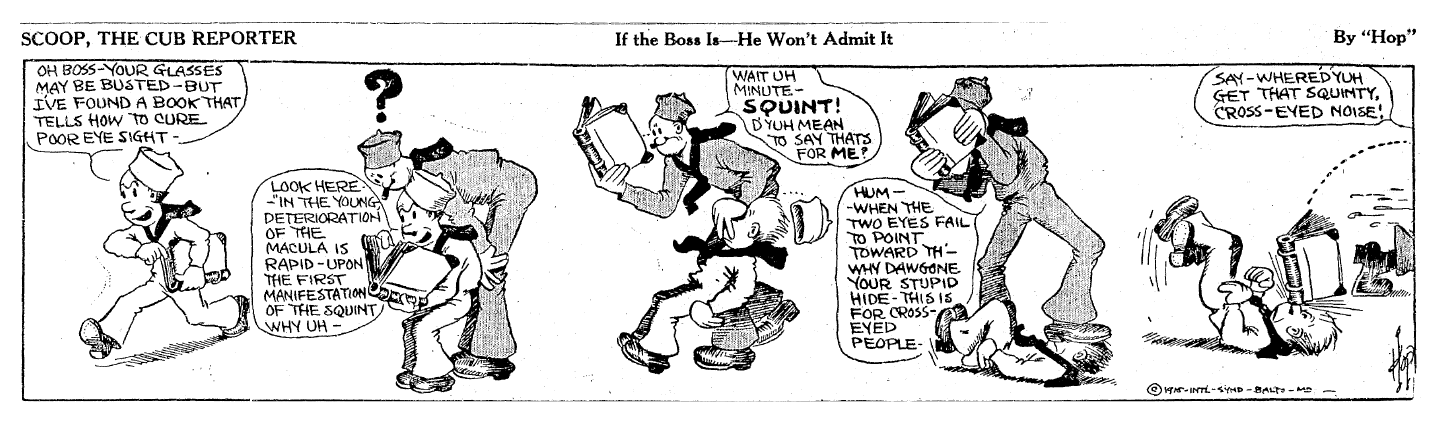
Figure 2. Cartoon from a 1915 newspaper. Original image courtesy of NewsBank, Inc (9). Reprinted from Schwartz and  Leffler (1) with permission from Elsevier.

References

  1. SG Schwartz, CT Leffler, "Uses of the word “macula” in written English, 1400-present," Surv Ophthalmol., 59, 659 (2014). Oxford English Dictionary, macula, n. meanings, etymology and more | Oxford English Dictionary accessed 11/18/25.
  2. A. Groenouw, "Knötchenförmige hornhauttrübungen (noduli corneae)," Arch Augenheilkunde, 21, 281 (1890).
  3. E Waldstein, "Die erblichen Hornhautdystrophien. Dystrophiae corneae hereditarie," Arch Ophthalmol., 21, 899 (1939).
  4. J Hirschberg (translated by FC Blodi FC), The History of Ophthalmology, 247, JP Wayenborgh: 1982
  5. F Buzzi, Opuscoli scelti sulle scienze e sulle arti tomo V, 95, Giuseppe Marelli: 1782.
  6. ST Sommerring , De foraminae centrali limbo lvteo cincto retinae hvmanae. Commentationes Societatis Regiae Scientarium Gottingensis, Vol. 13, 13, Joann Christian Dieterich: 1799.
  7. J Wardrop, Essays on the Morbid Anatomy of the Human Eye, 2nd Edition, 135,  George Ramsay: 1818.
  8. “Hop," Scoop, The Cub Reporter: If the Boss Is-He Won’t Admit It (cartoon). Trenton Evening Times 10/3/1915, no volume listed:12. Available from http://infoweb.newsbank.com accessed 11/19/25.
About the Author(s)

Stephen G. Schwartz

Professor of Clinical Ophthalmology, Bascom Palmer Eye Institute, University of Miami Miller School of Medicine, Naples, FL, USA

More Articles by Stephen G. Schwartz

Susan Schneider

Susan Schneider, MD, Consultant, Berwyn, PA, US

More Articles by Susan Schneider

Christopher T. Leffler

Associate Professor, Department of Ophthalmology, Virginia Commonwealth University and Richmond VA Medical Center, Richmond, Virginia, USA. His book on the history of ophthalmology can be found here: https://kugler.pub/editors/christopher-t-leffler/

More Articles by Christopher T. Leffler

Andrzej Grzybowski (1)

Andrzej Grzybowski is a professor of ophthalmology at the University of Warmia and Mazury, Olsztyn, Poland, and the Head of Institute for Research in Ophthalmology at the Foundation for Ophthalmology Development, Poznan, Poland. He is EVER President, Treasurer of the European Academy of Ophthalmology, and a member of the Academia Europea. He is a member of the International AI in Ophthalmology Society (https://iaisoc.com/) and has written a book on the subject that can be found here: https://link.springer.com/book/10.1007/978-3-030-78601-4.

More Articles by Andrzej Grzybowski (1)

Related Content

Newsletters

Receive the latest Ophthalmology news, personalities, education, and career development – weekly to your inbox.

Newsletter Signup Image

False

Advertisement

False

Advertisement

Explore More in Ophthalmology

Dive deeper into the world of Ophthalmology. Explore the latest articles, case studies, expert insights, and groundbreaking research.

False

Advertisement
The Ophthalmologist
Subscribe

About

  • About Us
  • Work at Conexiant Europe
  • Terms and Conditions
  • Privacy Policy
  • Advertise With Us
  • Contact Us

Copyright © 2025 Texere Publishing Limited (trading as Conexiant), with registered number 08113419 whose registered office is at Booths No. 1, Booths Park, Chelford Road, Knutsford, England, WA16 8GS.

Disclaimer

The Ophthalmologist website is intended solely for the eyes of healthcare professionals. Please confirm below: