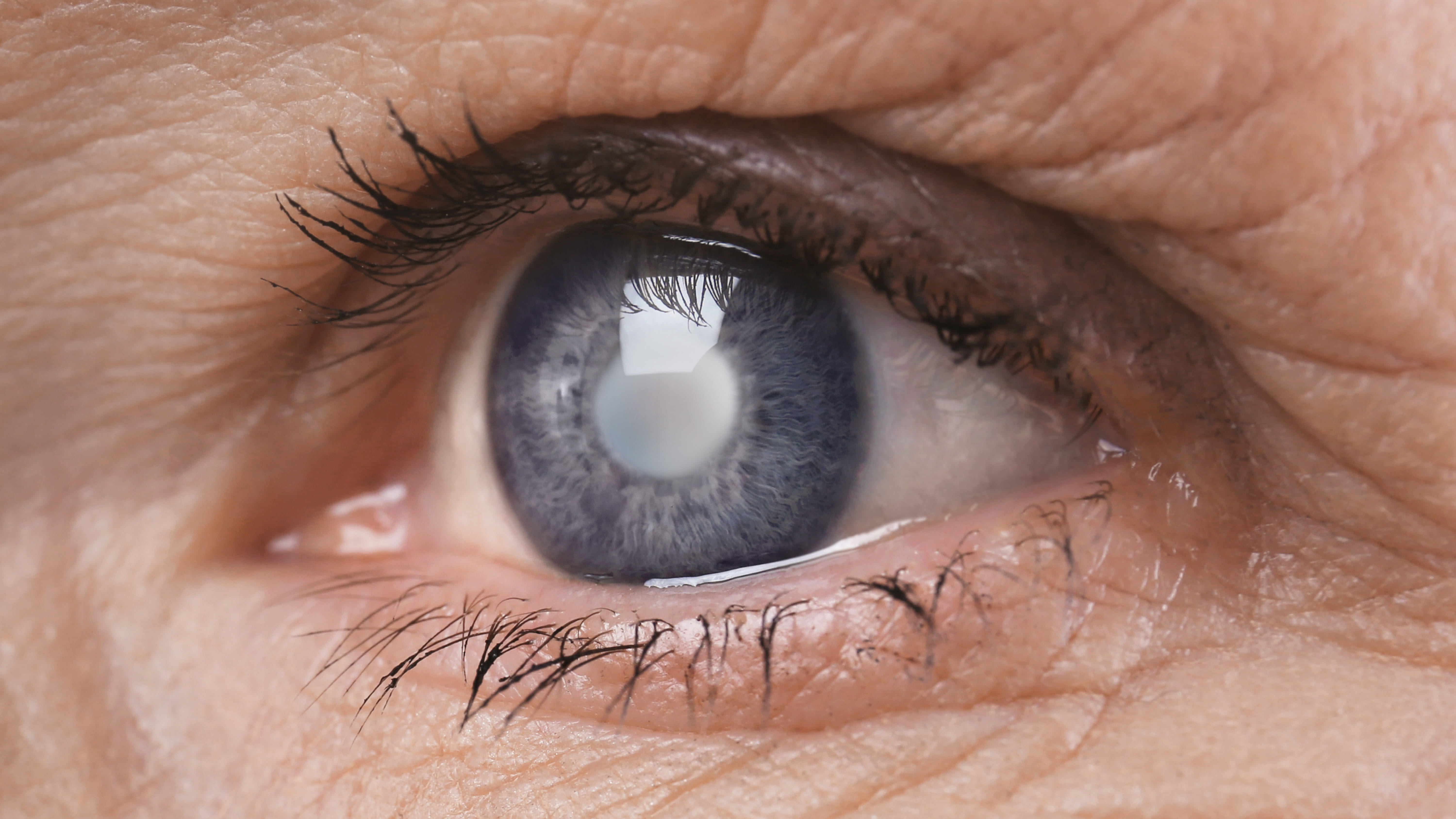
Clobetasol propionate – one of the most potent corticosteroids used in clinical medicine – may offer a fast, convenient new option for controlling inflammation and pain after cataract surgery, according to pooled Phase 3 trial data published in Ophthalmology.
The studies evaluated clobetasol propionate ophthalmic suspension 0.05% (BYQLOVI®), a nanoparticle eye-drop formulation designed to improve ocular penetration while minimizing the tolerability challenges often associated with potent steroids. Across two multicenter, randomized, double-masked Phase 3 trials involving 748 patients, investigators reported rapid reductions in postoperative inflammation and ocular pain, alongside early visual recovery and a safety profile comparable to placebo.
Postoperative inflammation remains one of the most common challenges after cataract surgery. Although topical corticosteroids are routinely prescribed, many require frequent dosing schedules, tapering regimens, or formulations that can be difficult for elderly patients to administer consistently. The study authors suggest BYQLOVI’s twice-daily dosing and short 14-day course could help reduce treatment burden.
“CPN 0.05% administered BID for 14 days was safe and rapidly improved ocular pain, inflammation, and visual acuity after cataract surgery,” the authors wrote.
The pooled analysis combined data from the CPN-301 and CPN-302 studies, conducted across 56 US cataract surgery centers. Patients undergoing uncomplicated cataract surgery were randomized 1:1 to receive either clobetasol propionate ophthalmic suspension 0.05% or placebo twice daily for 14 days beginning on postoperative day one.
The treatment met both primary efficacy endpoints. By postoperative day eight, 26.5 percent of patients receiving clobetasol achieved complete anterior chamber cell clearance sustained through day 15, compared with 6.8 percent in the placebo arm. Similarly, 71.6 percent of treated patients achieved complete absence of ocular pain by postoperative day four sustained through day 15, versus 27.7 percent of placebo-treated patients.
Secondary outcomes also favored the active treatment. Pain-free rates exceeded 80 percent as early as postoperative day four, while inflammation reduction continued to improve through day 15. Importantly, visual acuity recovery occurred earlier in the clobetasol group, with patients achieving their best postoperative visual acuity by day eight.
The durability of the response may prove especially clinically relevant. Investigators reported no evidence of rebound inflammation or pain one week after discontinuing therapy, despite the absence of tapering.
Safety findings may attract particular attention given clobetasol’s potency. Corticosteroid-associated intraocular pressure (IOP) elevation remains a longstanding concern in postoperative ophthalmic care, especially with highly potent agents. However, the investigators reported no clinically meaningful IOP increases requiring treatment discontinuation or pressure-lowering therapy.
While six patients in the treatment arm met protocol-defined IOP elevation criteria, all pressure rises were transient and resolved without intervention while patients continued therapy. Overall adverse event rates were similar between groups, with most events characterized as mild or moderate postoperative findings commonly observed after cataract surgery.
The formulation itself may also represent an advance. Unlike many ophthalmic suspensions, the nanoparticle preparation does not require shaking and was described by investigators as having the feel of a smooth aqueous solution, potentially improving ease of use for older patients with dexterity limitations.
The authors acknowledge several limitations, including the absence of an active steroid comparator and exclusion of patients with glaucoma or histories of steroid-related IOP elevation. Nevertheless, they suggest the data support clobetasol propionate ophthalmic suspension as a potential addition to the postoperative cataract toolbox.
