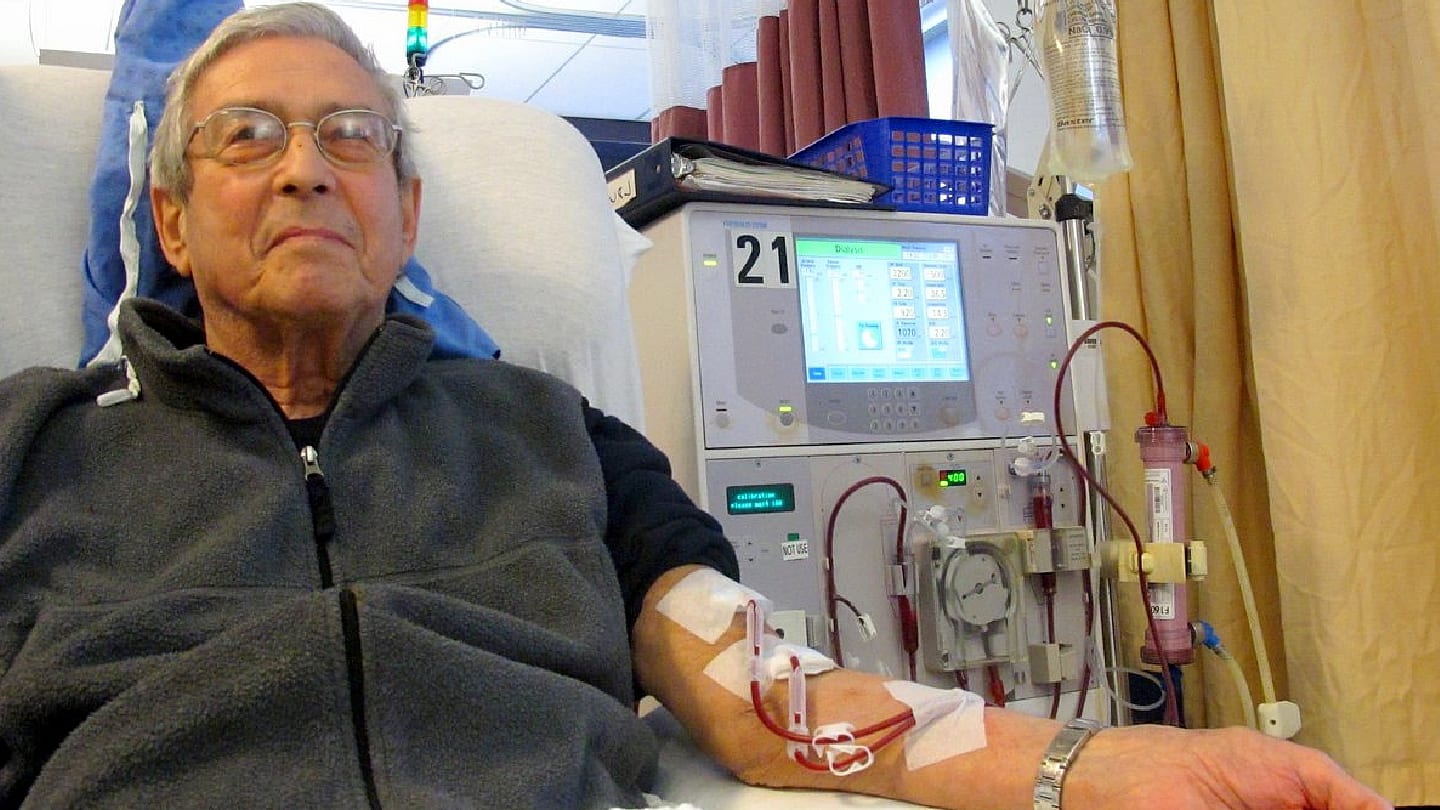
Patients undergoing hemodialysis may experience transient but clinically meaningful intraocular pressure (IOP) spikes during treatment, according to a new prospective study published in Translational Vision Science & Technology. The findings raise fresh concerns about ocular perfusion stress in patients with end-stage kidney disease (ESKD), particularly those already vulnerable to glaucoma.
Researchers from South Korea and the United States monitored 103 eyes from 56 patients receiving maintenance hemodialysis (HD), tracking IOP changes at five time points during and after dialysis. Unlike many earlier studies that relied only on pre- and post-dialysis measurements, the investigators captured detailed intra-dialytic fluctuations over the full four-hour treatment period.
The study found that mean IOP increased progressively during HD, peaking at 17.5 mmHg after four hours compared with a baseline of 14.9 mmHg before returning to near baseline 30 minutes after treatment. Mean ocular perfusion pressure (MOPP), meanwhile, steadily declined throughout dialysis, dropping from 56.9 mmHg at baseline to 47.2 mmHg at four hours.
The study authors suggest this combination of rising IOP and falling ocular perfusion may transiently expose the optic nerve to ischemic or mechanical stress.
Importantly, not all patients behaved similarly. Around one-quarter of eyes experienced what investigators defined as a clinically significant IOP rise of more than 5 mmHg during dialysis. In these eyes, pressure elevations were substantially greater, reaching mean values above 21 mmHg at the four-hour mark.
One of the study’s strongest predictors of IOP elevation was pre-dialysis serum osmolality. Patients with serum osmolality above 312 mOsm/kg were more than three times more likely to develop significant IOP rises during HD.
The researchers argue the findings support the concept of “ocular dialysis disequilibrium,” in which rapid osmotic shifts during HD drive fluid movement into the eye, temporarily increasing aqueous production or disrupting normal outflow dynamics.
The study also highlights broader concerns about glaucoma risk in dialysis populations. Previous epidemiological work has linked ESKD and chronic HD to higher glaucoma incidence, and the current findings may help explain part of that association. The authors note that patients with diabetic retinopathy or impaired retinal autoregulation may be especially susceptible to perfusion-related injury during dialysis sessions.
The findings suggest that ophthalmologists and nephrologists may need to pay closer attention to intra-dialytic ocular physiology – particularly in patients with glaucoma, ocular hypertension, or high pre-dialysis osmolality. As dialysis survival continues to improve globally, understanding how systemic therapies affect the eye may become an increasingly important part of long-term vision preservation.
