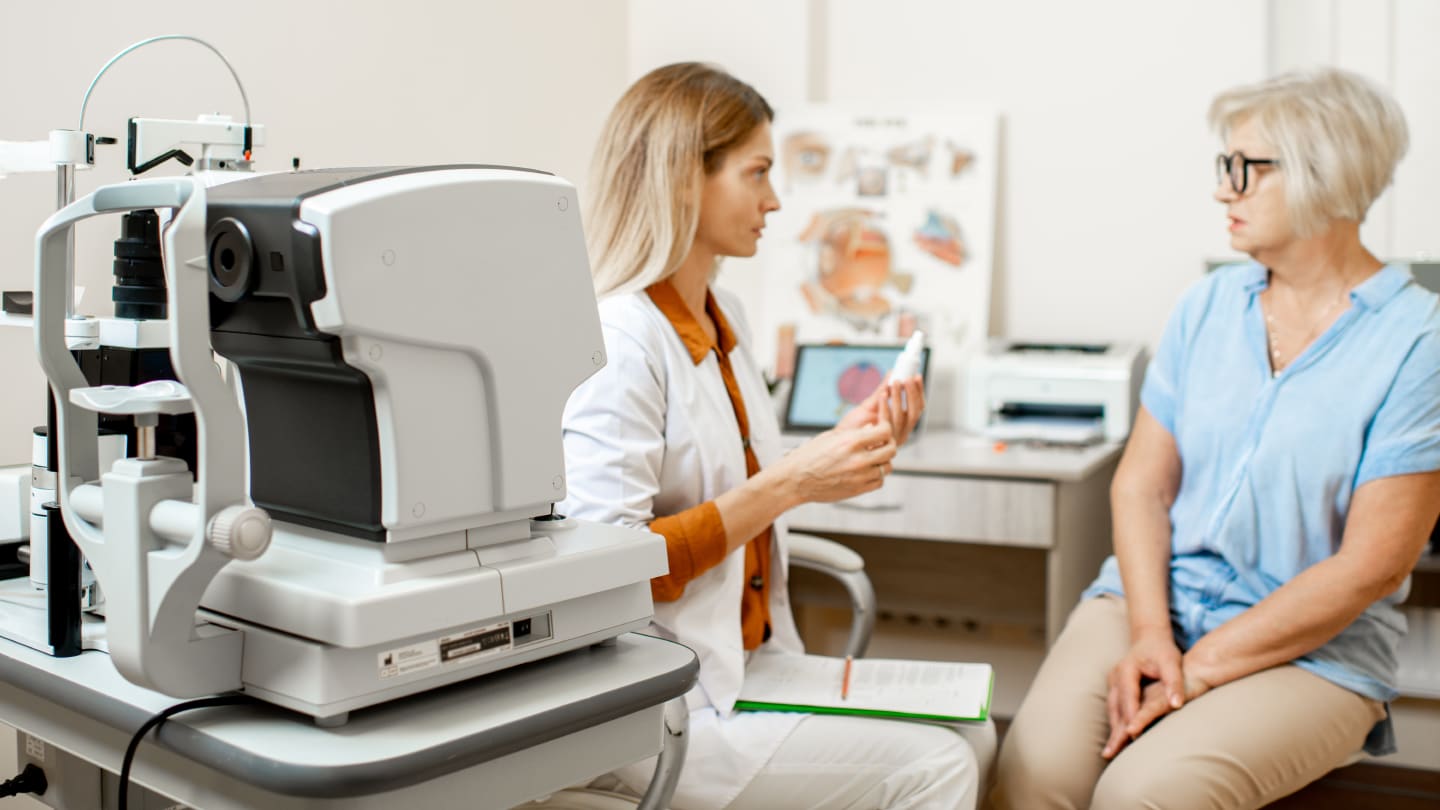
LASIKeye surgery is a popular option for reducing dependence on glasses and contact lenses, but it is not suitable for everyone. Factors such as corneal thickness, prescription, age, tear film health, and long-term vision needs influence which procedure is appropriate. As such, it is worth exploring the preoperative tests ophthalmologists use to assess eye health, including PRK, SMILE, Implantable Collamer Lens (ICL), and Refractive Lens Exchange (RLE), to better understand which patients may benefit from each particular procedure.
Core preoperative evaluation
Before recommending refractive surgery, an ophthalmologist needs a clear picture of the patient's eye health and visual requirements. These tests help identify potential risks and determine which options are worth considering.
Biometry: Measures the length of the eye and other dimensions, including corneal curvature and anterior chamber depth. It is particularly important when calculating the power of an intraocular lens for cataract surgery or refractive lens exchange.
Corneal topography and tomography: These scans map the shape and structure of the cornea. They help detect irregularities, assess corneal thickness, and identify signs of keratoconus or a risk of corneal ectasia before procedures such as LASIK.
Optical Coherence Tomography (OCT): Produces detailed images of structures inside the eye, including the retina and optic nerve. It can reveal conditions that may affect vision or else influence surgical planning.
Tear film assessment: Checks tear quality, stability, and the health of the eye's surface. This helps identify dry eye problems that could affect measurements or worsen after surgery.
Procedure options and ideal candidates
1. PRK (photorefractivekeratectomy)
PRK corrects refractive errors by reshaping the cornea after removing its thin surface layer. Since it does not involve creating a LASIK-style flap, it may be considered for certain patients who are unsuitable for LASIK.
Who may be suitable?
Adults whose prescription has remained consistent, generally for at least a year.
Patients with relatively thin corneas that still have sufficient tissue and a suitable shape for PRK.
People involved in contact sports or work where a corneal flap could be a concern (e.g. construction jobs or policework).
Patients whose tear film and ocular surface have been evaluated and whose dry eye issues are appropriately managed.
The surface needs time to heal after PRK, so recovery is generally slower than with LASIK.
2. SMILE (Small Incision Lenticule Extraction)
SMILE corrects vision by using a laser to form a lenticulewithin the corneal stroma. The surgeon removes thelenticule through a narrow opening, changing the cornea's shape without creating a large flap.
Who may be suitable?
Adults who meet the minimum age requirement and have a stable prescription.
Patients with nearsightedness, with or without astigmatism, within the procedure's approved correction range.
Individuals whose corneas are healthy and have measurements suitable for treatment.
Patients who are not currently pregnant or breastfeeding, since hormonal changes can temporarily affect vision.
People without untreated eye conditions that could interfere with healing or the final visual result.
SMILE cannot correct every type of refractive error, so the prescription and corneal scans need careful review before choosing this procedure.
3. Refractive Lens Exchange (RLE)
RLE involves removing the eye's natural lens and replacing it with an artificial one. It may be considered for patients whose age or prescription makes changing the natural lens a more suitable option than reshaping the cornea.
Who may be suitable?
Adults over 40 who are experiencing difficulty focusing on nearby objects.
Patients with a prescription that may be addressed through an appropriate intraocular lens.
People with corneal irregularities that limit their suitability for laser correction.
Individuals with early cataract changes (depending on how these affect their vision).
Patients who have previously undergone laser vision correction and need another way to address their remaining refractive error.
Because RLE permanently removes the natural lens, doctors must carefully weigh its benefits against the risks, particularly for younger patients.
4. ICL (Implantable Collamer Lens)
With ICL surgery, a corrective lens is placed inside the eye while the natural lens remains in place. This allows vision correction without removing corneal tissue.
Who may be suitable?
Adults, often between 21 and 45, whose prescription has stabilized.
Patients with moderate to high myopia within the lens's approved treatment range.
Individuals with enough space in the front part of the eye to accommodate the implant safely.
People whose corneal thickness or shape makes laser treatment less appropriate (provided they still meet ICL requirements).
Patients who value the option of having the implant removed or replaced if medically indicated.
ICL requires measurements of the internal eye structures and continued monitoring after surgery.
Why Is choosing the right eye surgery important?
1. Protecting the eye's structure
Each procedure has specific anatomical requirements. For example, removing too much corneal tissue during laser correction can increase the risk of corneal ectasia. If the cornea is unsuitable, the surgeon may explore alternatives such as ICL or, in selected cases, RLE.
2. Matching treatment to age and daily needs
A younger patient with myopia may have different needs from someone in their 50s who struggles to read because of presbyopia. The treatment plan should account for current vision problems as well as how the patient's visual needs may change with age.
3. Managing surgical risks
Preoperative screening can uncover problems that may increase the likelihood of complications, including persistent dryness, glare, halos, or poor visual recovery. Identifying these concerns beforehand helps the surgeon decide whether to proceed, treat an existing condition first, or consider another procedure.
4. Supporting long-term visual comfort
A successful result should fit the patient's everyday activities and expectations. Reading, driving at night, working with screens, and playing sports may all influence the treatment decision. Patients should also understand that surgery may not eliminate their need for glasses in every situation.
5. Considering the surgeon and available technology
The quality of the assessment matters as much as the procedure itself. Appropriate diagnostic equipment, the surgeon's experience with the recommended technique, and planned postoperative reviews all contribute to patient care.
There is no single refractive procedure that suits every patient. PRK, SMILE, RLE, and ICL address different visual needs and come with different requirements. Careful testing and an honest preoperative discussion about benefits, limitations, and recovery help the ophthalmologist recommend an option that is appropriate for the patient's eyes and long-term expectations.